Laura Howard: Writing
Showing posts with label Writing. Show all posts

5/30/13

Seriously? A SERIES???


Greetings readers! My blogging prowess has been utterly lackluster in the weeks following the release of The Forgotten Ones, for which I apologize. Hopefully today's guest post redeems me in your eyes!

Anna Cruise has been writing and drooling over boys since middle school. Lots of years have passed but some things never change...


Did you just type The End on the manuscript you've been slaving over? Did you shed big, sloppy tears as you typed the final words of your denouement? Did you drag your feet—endlessly—while hammering out those last pages, simply because you didn't want to say goodbye to your characters?

Well, guess what?

You don't have to say goodbye. And you shouldn't say goodbye.

I know what you're thinking. Wait a minute. I just finished this goddamn book. What the hell is she talking about?

I'm talking series. 

Yep. Series.

Right now, you're thinking: Uh, I wrote a stand-alone book.

I'm here to tell you there's no such thing. Every single book can be turned into a series. Every single one. And even if you wrote a book that you had no intention of continuing (like, you didn't put in one of those annoying cliffhangers...your book actually has an ending!!) the simple fact is that you can always continue the story. There is always a loose thread, a place to pick up, a new idea to explore with the characters you've gotten to know so well. It doesn't have to pick up where the previous book ended. It's not a straight continuation. Maybe it's a storyline that didn't get fully explored. Maybe it's a minor character that deserves a bigger story. Maybe it's a different point in time. But you can find that thread and weave it into something bigger. 

Look, series sell. Big time. Readers want more stories. Because, just as you've gotten close to the characters you gave birth to, your readers have formed attachments to them, as well. I can't count how many reviews I've received where people mention how they wanted the story to go on, where they've actually docked me a star because they simply wanted more story. These characters become friends...friends that they don't want to let go of, you know? 

So, should you write a series just to satisfy your readers? No. Because you'll benefit, too. Not simply in sales (do you know what the click-through factor is when you hyperlink the next book in your series in your e-book file? Me, either. But it's good.) but in reader loyalty, too. Your readers will become deeply invested in the stories you weave and that means they'll become pretty invested in you, too. Your fan base will grow, your interaction with your readers will grow (as long as you engage along with them) and your sales will absolutely grow, too.

There you go. Congrats on typing The End. 

Now sit your ass back down and type Chapter 1. 

To the next book in the series you didn't know you were going to write.

Because, trust me...your readers will want it.


I love reading series, even though it can be hard to wait for the next installment! 

How do you feel about writing series?

4/10/13

How to Create Unforgettable Characters


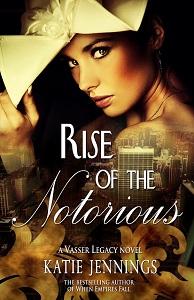
Katie Jennings is back on Finding Bliss to celebrate her upcoming release Rise of the Notorious, Book 2 of the Vasser Legacy Saga.

It also happens to be her one year anniversary of being a published author. Welcome back Katie, and Happy Anniversary (be sure to check out her debut novel Breath of Air, FREE on Amazon.)

What’s a great book without great characters? They drive the story and make it interesting, therefore it’s very important to get them right. Ergo, no Mary-Sues! No one wants another Bella Swan (sorry Twilight fans!). We want more Elizabeth Bennets and Catherine Earnshaws and Emma Woodhouses! We crave manly men like Heathcliff and arrogant ones like Mr. Darcy and Mr. Rochester! No more Mr. Perfects, please, I’ll take the bad boys with checkered pasts and the spunky temperamental girls any day!

But just how does a writer go about creating a memorable character? One that will stick with a reader for years to come, holding their hand like an old friend as they continue on with life, never really quite the same after having “met” them? Perhaps there’s no concrete formula for this, but I will say that the first thing a writer needs to do is get a really good grasp on human nature. If we’re going to write about people, then we should probably have a pretty good idea on how people operate, right?

So how does one go about doing this? Well, most of it is already ingrained in us, we just need to pay attention. Think about it. We interact with people every day. We watch people on television, we read about them in newspapers, we talk to them at the grocery store. We are inherently social creatures, and in addition to that, we are all also very unique in the way we react to situations. Everyone has their own special way of laughing, of speaking, of smiling. Every woman has her own way of crying, her own way of getting angry, and her own way of falling in love. Each man out there has his own way of expressing his frustration, voicing his opinion, or succumbing to his desires. Our differences are what make all of us special, so as writers it is so important that we spend time fleshing out our characters and really focusing on what it is that makes them different from everyone else out there.

What little quirk does your heroine have that has the hero stumbling over his feet to kneel before her? Is it her dimpled smile? Is it her ability to listen quietly to his needs and quote poetry to ease his stress? Or maybe it’s her sharp tongue and wit that always catches him off guard, just when he thinks he has the upper hand?

No matter what it is, make sure you think long and hard about the traits you want your character to have. And for heaven’s sake, please don’t make them all good qualities! Because for every good trait we possess, there is a bad trait to accompany it. And, in my opinion, the bad traits are the ones that make us human, the ones that make us real. Don’t you want your characters to be real, too?

If you’re still having trouble organizing traits for your character and keeping them straight, then let me make a very helpful suggestion to you:  go buy an astrology book, and make it your new best friend. If you don’t know where to start, let me recommend one to you: Linda Goodman’s Sun Signs.

Some of you may scoff at it, but if you do then you are seriously missing out on an in depth analysis of different personalities. Put aside your disbelief in it, and instead comb through the different signs and read about each personality. It will teach you a lot, just trust me! By utilizing this widely available and extremely helpful tool, you will be able to create believable characters that have both good traits and flaws, and that are consistent. Consistent is a BIG word with me, as I am a Virgo and consistency is a huge thing for us. You see, you can’t have your hero be both the shy boy next door, and yet he always knows the exact right thing to say to comfort or woo your heroine. No! A shy boy next door is also probably going to be bad with words, and he’ll probably always say the wrong thing because he’s socially awkward. See, doesn’t he sound more interesting already? And, best of all, he’s not perfect. No one is, and besides, perfect characters are awfully boring!

Or how about the oh-so-handsome stranger who swaggers into town outta nowhere and has a fierce temper, only to then suddenly turn around and be the sweetest guy ever as he patiently hangs on every silly word your heroine says? I doubt he exists in real life, sorry. It would be much more realistic for him to be arrogantly demeaning in the beginning, only to have the heroine slowly teach him to soften up a bit, but he still needs to retain his inner nature. He’s probably an Aries, and Aries men don’t change for nobody. But, he may warm up to a girl who’s caught his eye, and show her lots of affection which will be plenty sweet, but don’t expect him to lose his selfish nature or his arrogant pride. He’ll hang on to those qualities till his dying day. And hey, that’s what makes him interesting, don’t you think? I do.

To give you a brief summary, I’m going to sum up some pros and cons of each of the twelve signs, just so you can see how vastly different they all are and you can get excited about which one to choose and then explore in even more depth:

ARIES:  Bossy, arrogant, selfish, and extremely stubborn. But also energetic, spunky, cheerful, and the life of any party.

TAURUS:  Consistent, down-to-earth, noble, and hard-nosed. Homebodies to the core; usually love and connect with nature.

GEMINI:  Flighty, whimsical, witty, and fun. Two-faced and self-centered; bright and clever. Great speakers and lovers of good conversation.

CANCER:  Wildly emotional, hardworking, stingy, and very caring. Values stability in life and home more than anything; extremely cautious.

LEO:  Proud, temperamental, conceited, romantic, and exceptionally affectionate. These people are born royalty (in their eyes), and they want you to know it!

VIRGO:  Practical, smart, often shy and always just a little bit OCD. Loves putting everything in neat little organized piles, alphabetically and by color. Passive-aggressive but very trustworthy.

LIBRA:  Social-butterfly, indecisive, airy, and accepting. Values fairness and honor above all else; despises hypocrites!

SCORPIO:  Vindictive, sly, poker-faced, passionate, and wildly intelligent. Do not cross these people as you will regret it!

SAGITTARIUS:  Fun-loving, easy-going, and forgetful. Spontaneous and enthusiastic about life, yet impulsive and often spread themselves too thin.

CAPRICORN:  Introverted, quiet, broody, and hardworking. Struggles with depression if not dedicated to a distinct purpose in life.

AQUARIUS:  Friendly, inventive, extroverted, and emotionally detached. Fiercely independent and unpredictable. Values freedom above all else.

PISCES:  Giving, empathetic, shy, and deeply emotional. These people feel every emotion down to their very core, and are usually very spiritual.

So these are obviously the generic traits of each sign, as any good astrology book will go much deeper. But it gives you an idea, and hopefully a jumping off point as far as where to take your own characters. I like to play around with the different signs as a challenge to myself to see if I can accomplish the personality in my writing. Why not give it a shot yourself?

I hope this helps you while building your characters! Just know that no one is perfect, and that the flaws are what make our characters memorable and enjoyable to readers. So take the extra time to fully plot out your character’s personality and understand who they will be long before you ever start writing. It will show through in your dialogue and in your descriptions of your character if you truly understand them or not, so get to work!

* * *


Now for an excerpt from Rise of the Notorious…

                                                            
The letter lay on her black granite kitchen counter, unopened. Madison leaned against the cabinets a few feet away, sipping a glass of mellow red wine as she considered her next course of action.
She knew what it was, had known it the moment it had shown up in her stack of daily mail. A plain white envelope, no return address, her own name and address in plain black font.
Within an hour of receiving it, she had tucked it inside her purse and left the hotel as discreetly as possible. Grant had been trying to reach her all day, but she just wasn’t in the mood to discuss Shaw. Especially not now, not when she had a fresh threat sitting before her, eager to be read.
Part of her seriously considered tossing it in the red hot flames of her fireplace. The contents couldn’t hurt her then, couldn’t anger her. But her shameless curiosity and morbid nature wouldn’t give her the nerve to destroy the letter. No, she was going to read it.
It was just a matter of when.
She continued to stare at it, letting the wine smooth out some of her anger and anxiety. The first letter had thus far turned into nothing, so there was no reason to believe this one would be any more destructive.
Just do it, she ordered herself, setting her wine aside and grabbing the envelope. She tore it open hastily, unearthing the paper within and unfolding it.
She shut her eyes for a brief, careful moment, then opened them to read.

When the Queen’s courage blinds her, she does not notice the blood at her feet.

Her breath held frozen in her lungs as she processed the words, yet again type-written in simple, black font. The fear skittering beneath the surface of her skin annoyed her, but she couldn’t avoid it. This letter was decidedly more threatening than the last had been.
Perhaps not to her, but certainly to those whose blood this person suggested would pool at her feet.
Did they mean her family? Her brothers?
The thought sickened her, a coldness settling over her entire body until she shuddered from it. Setting the letter aside, she lifted her glass of wine to her lips and attempted to quell the nausea now swimming in her stomach.
Who was this person, and just what were they trying to do? Scare her?
If they were, then she wasn’t going to give them the satisfaction of a surrender. It was still a faceless, nameless threat. If he or she was coward enough to resort to sending ominous written messages, then what danger could they really pose to her?
But it was the terrified uncertainty of it that still kicked her in the ribs and ached deep within. She couldn’t ignore the letters any more than she could address them. Both would be foolish acts, and both could provoke only further threats, or even an attack.
For now, it would be best to keep the letters a secret and pray that they were nothing more than wasted paper.
Her cell phone suddenly began to ring, the ringtone oddly suited for the moment.
Here comes the rain again…
She checked the caller ID out of habit, and as she did so she instinctively began to ignore the call. But something stopped her, some urgent, driving need that she couldn’t shake.
It had her accepting the call and numbly lifting the phone to her ear.
“Hello, darling.” She tried to put some measure of confidence into her voice, but knew she failed miserably. Her fear failed her, and she could tell by his initial silence that he noticed it.
“What’s wrong?” Wyatt asked sharply. She heard him shuffle around, probably rising from where he had been laying in bed.
“Nothing’s wrong,” she answered, even as her eyes automatically shot to the letter, still lying open on the counter. As she took a sip of her wine, her hand trembled once.
“I’m coming over.”
“Don’t,” she ordered, though she was suddenly overcome by an intense, conflicting desire to see him. Damn him for opening her up to this urgency again, this reliance that was ridiculously unhealthy for her sanity. She said the next words more as a confirmation for herself than for him. “I don’t need you.”
“I never said you needed me, sweetheart,” Wyatt shot back. “I know you’re more than capable of handling yourself. However, you sound upset, something I’m not used to hearing so I would really like to come over and see for myself that you are okay.”
“I was just going to bed.”
“Liar,” he replied, though she could hear the affection in his voice. “I called you to see if you wanted to get dinner with me tomorrow.”
“I’m very busy,” she said without thinking, her response mechanical, without feeling. But when she heard him laugh, as though he had completely expected that answer, she inhaled deeply and tried again. “You can pick me up at eight.”
Before he could reply, she hung up and held her cell phone to her lips, her eyes fluttering closed as she let out a long, troubled breath.
“I still love you, you bastard,” she whispered, her heart exploding to bloody pieces within her chest as she felt tears spring into her eyes. Tossing the phone aside, she grabbed her wine and fled her kitchen.
Tomorrow was a new day.
* * *
Rise of the Notorious
By International Bestselling Author
Katie Jennings
Coming April 23, 2013

Click HERE to Enter the Giveaway!


* * *
Meet Katie Jennings…

International Bestselling Author Katie Jennings is the author of six full length novels, including the popular fantasy series The Dryad Quartet as well as the bestselling family drama series The Vasser Legacy.

She lives in sunny Southern California with her husband and cat, who both think she’s the biggest nerd ever. She’s a firm believer in happy endings and loves nothing more than a great romance novel.

You can find out more about Katie on her official website, www.katieajennings.com.

3/11/13

You Have Pacing Issues, My Friend.


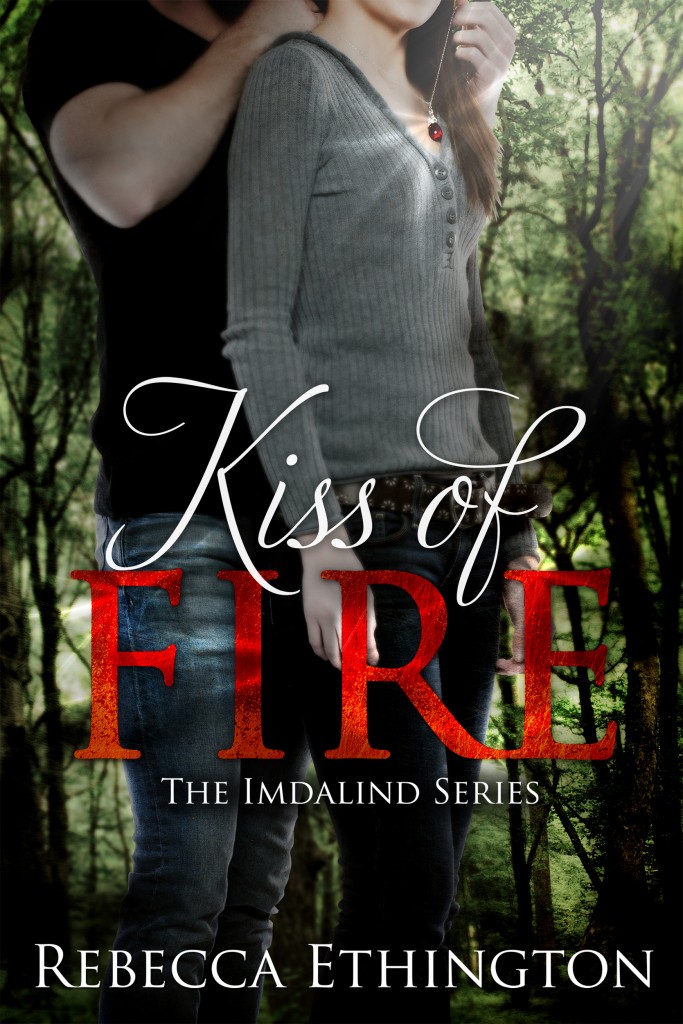
Rebecca Ethington is taking over Finding Bliss today as part of her Kiss of Fire Blog Tour.

I asked her to write about her tips for pacing a novel. And, man she delivered!


So, you've got a wonderful idea for a great story and you are going to write it down. So you sit down, you write and before you know it you are done. Book over, the end. But, what happened? And how and when and why and with who. Did your readers get to know your characters; did they love them, could they keep track of where they were and who was talking? 

Did your story have good build up and keep your readers engaged? 

No? Maybe? You’re not sure?

You have pacing issues, my friend.

Pacing ultimately begins with the plot of your story. Plot is more than story; it’s the meat, the actual step by step road map of your story. Plot is the in-depth, the long term and the hidden bits of story that make up your amazing novel. Does your plot have lots of conflict, and good development? Without both your pacing is going to suffer. A lot of action goes by too quick, too much inner monologue and not much conflict tends to be slower. So where do you want to be? Somewhere in the middle. You want to manage your readers with your pacing. Give them a break with slower bits, and hold them on the edge of their seats with the rest. 

But finding the sweet spot right in the middle can be tricky.

In case you don’t know my literary background begins in dark theatres and padlocked notebooks hidden under my bed. The first thing I openly sent out into the world was a co-written script about a bunch of kids who get trapped in a cave only to be systematically murdered. Which means that theatre scripts are where I get most of my pacing experience from, so most of my personal tips are going to bleed over from that. 

Some of my personal little tricks (Bring on the theatre baby!)
  • Mood – You are sitting in a darkened theatre and the lights begin to dim, the music melds into the low whisper of wind, and a lone woman steps onto the stage. In the theatre mood is set with lighting, music, and ultimately with dialog. The same can be done in writing; lots of emotional descriptions and a detailed set of the scene automatically sets a mellow mood and in turn slows the pace. The same is true for faster paced scenes, brighter lights, powerful music, quick paced dialog creates an intense mood the drags your reader or audience forward. The mood of your writing dictates your pacing. By making the mood clear for each scene as well for your entire novel from the beginning you are able to set a strong expectation of pacing, and prepare you reader for what is to come.
  • Cliff hangers – I LOVE cliff hangers, I also HATE cliffhangers. I write a lot of them, but I think every good story teller does, they are crucial for keeping your reader engaged and building a solid plot. Cliffhangers are one of the best ways to speed up pacing, they draw the reader forward from one chapter to another, from one paragraph forward. Fights, trauma, new information; they all lead to different levels of tension and pacing. In theatre the most common cliffhanger is the one placed right before intermission – the climax.  
  • Jump cuts – A quick scene change from one place to another is another way to help improve pacing. This is a common technique on stage, and easy to follow as actors appear on different sides of the stage, or on different set levels. In written literature it is also a very effective technique – as long as you readers can follow. If it only creates confusion, it will actually have the opposite effect and slow the pacing down. 
  • Rapid Fire! A great example of rapid fire pacing is the final fight in Harry Potter. Chapters upon chapters of fight in the battle of Hogwarts. You are moving from one section of the castle to another, different battles, death, from one character group to another. It draws you in, and keeps you there as the pacing keeps its level high. Those are the books that keep you up late at night.Now, obviously you can’t have a novel that’s quick paced the entire time. The pacing needs to fit the setting of the scene, let the love scenes move slower, the fights move quickly. 

 Thanks so much Laura for having me, and for hosting the tour!


a Rafflecopter giveaway

3/7/13

For the Love of World Building


As of today, I'm just  about halfway through edits on my novel, The Forgotten Ones. I want to say thank you to all of my readers for your patience with me as I bumble through the publishing process. 

And, thank you for sticking with me even though my blogging has been sort of irregular the past couple of months. 

Today I'm welcoming Teal Haviland who will be talking about one of my favorite subjects - World Building!


When asked to write this guest post about world building several thoughts rushed into my mind. All clamored for my attention, wanting it to be focused on them. 


Two won out—how honored I was to have been asked to write my first guest post by a blogger (Thank you, Laura!!!), and the one that really staked claim on my consciousness . . . I don’t know enough about world building myself, yet, to write a blog post. After shooing away my insecurities, however, I see I do. I also realized I love it
Any writer of fiction creates a world for the reader to escape into, but the worlds of fantasy writers—whether it’s urban, high, epic, or any of the other classifications of fantasy—create worlds which send our imaginations on a journey of magic and myth, rich with fantastical discoveries. 

It’s true I am still learning my craft (and I hope to always be learning) but I have information to offer those who are attempting to write their first book, hopefully helping them a bit along the way as others have helped me.
So . . . what do I know about world building? This guest post proved to me I know more than I can fit into my word limit if I don’t want it to read like a textbook excerpt, but there are two things I’ll share that condenses everything I have learned down into key points:

  •  Everything that happens in the story being written is creating its world; from the clothing worn, food eaten, magic used, hierarchy, weapons, landscape, rituals, people, animals, fantastical creatures, language . . . everything. It’s what I enjoy most about fantasy—the limitless possibilities of the characters, stories, and worlds.
  • The writer must know the rules of the world being created and stick to them. This is the one piece of advice I have heard and read continually. It’s like the sacred rule of world building. I think if it’s broken, the offender gets thrown into another fantasy writer’s version of Hell. Depending on the writer, that could be good or bad. I don’t plan on discovering which. 
I chose to write in a genre known for its opinionated, picky, and sometimes finicky fans, but I wouldn’t have it any other way. I am not just a writer of fantasy; I am one of those fans. I have always loved fantasy of all kinds, and the reason I chose the genre that holds the best, but most particular, readers can be explained in one word—escapism.
Anytime I thought about how great it would be to write a book one day, I never questioned the genre I would try to make my mark in. It only makes sense to retreat into writing my own stories just as much as I have always escaped into others’.

To me, the best part of world building is being the creator of a story that is mine. As the author, I call the shots. I decide what makes the world work and what can destroy it, who has power and who wants it, who has the ability to use magic and whose heart has been blackened because of its use, who succeeds and who fails, who finds love and who loses it . . . every tiny detail. 

I can be as simple or intricate with my creation as I decide suits the story and characters—as long as I follow the rules I dream up.

 I’m the boss (bwahahahahaaaaa). Oops . . . did I type that? Oh well, I do intend on taking over the world, so I need to practice my sinister laugh. 

The writer’s imagination is the heart of the world that’s built, the words are its foundation, and the story as a whole is the structure which houses its soul. Fantasy is created from wonder . . . just as it creates wonder in those who read it.

World building . . . what’s not to love?


What do you like best about World Building?

3/2/13

Six Questions with Laury Falter


Good morning and welcome to another super awesome week of Six Question Saturday!

Please help me welcome author Laury Falter, author of YA paranormal romance and urban fantasy. 


Was there a certain book or author that inspired you to write?

Gosh no. I'd been writing my entire life, never really showing my work to anyone (with the exception of a children's pirate book I wrote that Scholastic took a serious look at before deciding against publishing it), and then I showed my sister, Babs, the first few chapters of Fallen. She wrote back in big caps SEND ME MORE. So truly Babs was my inspiration. Every chapter I sent her, she kept pushing me for the next one. Like an addict, but in a good way. :)

Do you plan out your novel or just fly by the seat of your pants?


You know I once read an interview by another author who said that there are two types of writers: architects who build the story from an outline and gardeners who start from the seed of an idea and write the story from there. I'm both. I start as a gardener, planting the idea, writing it, nurturing it, and when I'm about halfway through the book I write the outline to sum it all up. Not sure if that's how others do it, but seems to work for me.

How do you edit? 

Oh, that's simple. I don't. :) I leave that to my editors. I write my story and then turn it over to a content editor and a proofreader. Both are fantastic. It took me a while (and several books) to find the best ones, but they are worth the wait. They are absolutely phenomenal. I couldn't live without either one of them.

Did you build a platform before releasing a book? 

Oh no, not even close to it. I literally wrote Fallen (my first book) in just under two months, put it online for sale, and let it sit there. Lame, I know. I just never thought anyone out there would read it. When they did - which I learned was the case after I released the next book in the series (Eternity) and the sales started to skyrocket - I was blown away. When that happened, I figured that I should give writing a true shot, which required me to build out a platform. Of course, I was slow to Facebook and Twitter, but there's a reason behind it. It's not a very good one and I harangue myself daily for it, but here's my dirty little secret...I'd rather be writing than writing about writing. When I'm in front of my computer, half of me, the predominant part, keeps pulling me back to the open Word doc with the title of whatever I'm writing at the moment. And the thing is, I don't go kicking and screaming. I go willingly.

How have you found the right readers for you? 

I'm not sure I can take that credit, to be honest. I think that they found me, thankfully, because I put virtually no effort into promoting my books. I'm guessing its through word of mouth. I write what I'd personally like to read, and put it out there (and then hold my breath until the first reviews come in). Strangely, I write young adult paranormal romance and urban fantasy but my fans come from all walks of life...male, female, domestic, international, teens, adults, retirees. And they are the best, so incredibly supportive. I feel blessed because of them.

If you could start all over, what would you do differently? 

Huh, that made me think. Truthfully...nothing. At the risk of turning sappy, writing has been a journey, one that I've muddled through, tripped over, gotten a little dirty on. I wouldn't change it, though. It's a good experience...even when you're erasing the last three pages you spent hours on to start again.


Who has inspired you to publish your book?   

2/20/13

To Journal, or Not to Journal—Now, THAT is the Writer’s Dilemma


Happy Humpday! 

Today's guest blogger is Danielle Bannister, author of Pulled and it's sequel Pulled Back.


Every English class I have ever taken (Elementary through Master's) has either encouraged or required that each student keep a journal.  And for years, I have kept one, because I'm a good student that way. However, not once in all of those years of using a journal, have I enjoyed it.  

Still, I kept writing a journal every year because those teacher's kept insisting that it was the best way to clear away the cobwebs in my brain, so that when I actually DID sit down to write, I would be free to do so without my subconscious mucking things up.  

So, it has always been with great reluctance, that every year, I would begin one of these horrid things thinking this time I would find the 'journaling zen' that I had so often read about.  Alas, each journal fell by the wayside after a few short months.  The time had come to ask myself why?

The answer, was more logical than I could have hoped.  As a writer, I just couldn't see the point of journaling.  Perhaps it was because I knew I was writing something that no one would ever read (and why would I bother writing if no one was ever going to read it???)  Perhaps I found it boring rehash the monotonous diatribes of the day gone by.  Journaling, to me, felt like a colossal waste of time. (gasp!  I said it out loud!) (Goes and hides in a corner afraid someone will come and remove her coveted 'writer' cup for such a risque thing to say)


Wait!  Before you steal my cup...I have something else to say!!!!  

My opinion of journaling changed on, January 1, 2013, when I cracked open THIS baby.


 write in me


Not so fast, you say.  You've been lured into the new journal trap before.  It's wonderful bliss until you get so bored you want to stab your eyes out with the pen.  Good point.  But not only did I change the type of journal I normally buy (usually it's just a cheapo one 'cause I know I'll never finish it), but I also changed WHAT I write in it.  And that, as they say, has made all the difference.

Instead of regurgitating my day that I don't really want to recall, instead I'm putting my journaling time to good use.  I'm writing a novel in it!  (shut the front door!)  Yes, you heard me correctly.  I am HAND WRITTING a new adult novel inside those 300 lined pages.  When I finish with the journal, I will have finish my first draft of a new novel.  THAT is a writing exercise I can get behind!

So far in the few days I've had the journal, I've already gotten 6 chapters down!  Now instead of journaling being a chore, it's something that gets my creative juices flowing.  Therefore, if
journaling isn't working for you and your writing, either ditch it, WITHOUT GUILT, or, change the way you use your journal. (Tweet this) Maybe it isn't a novel.  Maybe it's a place to jot down story ideas.  Maybe you write one short story a day, just for writing practice, maybe you draw the scenes of locations in your book. Whatever.  It's yours to use however YOU need it to work (or not work).  Don't listen to others (even me) about what will be the best for you as a writer.  No one can answer that but you.

That said, I'll leave you the best advise I've ever gotten as an author:  “Write on!”  

Indeed.


                                   Pulled Back (Book Two)

I'd love to hear from you! What are your thoughts on Journaling? Or Free-writing in general?

2/11/13

My Self-Publishing Journey

When you come to Finding Bliss, you expect to see an article of some aspect of  writing or publishing, right? What if once a week I wrote a post about what's going on in my personal writing life? 


A big part of what I do here is invite writer friends to share their experiences so that both you and I can learn from their mistakes and successes. I don't really talk about what I'm doing, and it's time to get out of that habit.


2/9/13

Six Questions with Maggi Myers


Today's Six Question guest is Maggi Myers, author of The Final Piece. She's also a veteran of the Twilight fandom that I was a member of what seems like a lifetime ago.

Welcome to Six Questions Maggi!

2/4/13

Surviving Your First Draft

Welcome to my spot on the official Just Breathe Tour featuring
one of my favorite people on the planet, Kendall Grey!

Fasten your seatbelt and prepare to be amazed as you learn Kendall's tips on how to dig in and hammer out that beastly first draft!


My first experience with drafting a book was pure heaven. I had no inhibitions, no worries, no clue what I was doing. I didn’t get hung up or stressed about making the book perfect. I focused on getting the words out. When I finished, choirs of angels sang. Rainbows beamed from my head. Disco balls twirled.

Then other people read the book.

And hated it.

Apparently, the beautiful baby I created wasn’t nearly as beautiful as I thought. I locked myself in self-torture chamber of humiliation and shame. After a few weeks of self-loathing passed, I emerged from my hidey-hole, tail between my legs, and humbly sought advice from other writers who told me to pull up my big-girl panties and deal with it. Writers must accept things they don’t want to hear. Like, “Your baby is butt-ass ugly and needs a major facelift.”

Eventually, I grew enough courage to seek out a critique partner, who helped me tremendously. Over the course of thirteen rewrites (not revisions, REWRITES) spanning four years, the story improved. I self-published INHALE in May 2012.

But when it came time to draft the second book in the series, doubt paralyzed me. What if this baby was even uglier than the first? What if I had to rewrite the book thirteen times again? I didn’t think I’d survive another ripping. I considered quitting before I even started.

I scrounged more courage and drew on my experiences with writing the first draft of INHALE. Instead of worrying about writing a book that would please everyone else, I wrote the book for me. I wrote it as if no one else would ever see it. The change in focus gave me the freedom I needed to push the limits and let my imagination go crazy, just like I did the first time around.

And guess what? The second book was better. Yeah, it was still ugly and required a lot of make-up before it made its first public appearance, but this one needed less work. Reviews for the second book are better than the first, too. I must’ve done something right.

My advice for surviving a first draft is:


  • Write for yourself first. If you don’t enjoy your story, it’ll show, and readers won’t enjoy it either.
  • Practice patient persistence. The more you write, the better you write.
  • Accept the fact that when you’re done drafting, you’ll have a lot more work to do. Drafting is the easy part, so enjoy it while you can. Revising takes twice as much time and concentration. Don’t like revising? Tough.
  • Trust your critique partners—they have your back. Don’t fuss over little things like word choice and grammar in a first draft because your story is likely to change in the revision stage anyway. Crit partners will help you fix the big issues first. Worry about the details later.
  • Keep your blinders in place. Don’t get distracted by Ms. Prissy Pants Author’s glowing reviews, rankings, and sales. You’re not her. Focus on your work. She’s irrelevant.


Hard work pays off. You might not see the fruits of your labors right away, but if you keep at it, your writing will improve, and so will your chances of selling a lot of books down the road. :-)


a Rafflecopter giveaway a Rafflecopter giveaway

1/5/13

Six Questions with Grace Elliot

Today's guest is Grace Elliot, author of Hope's Betrayal and Eulogy's Secret - engrossing historical fiction.

No matter what genre you write in, a good cover is key... and if you scroll down to see Grace's covers you'll see that she has breathtaking cover art that hooks you immediately.


1. How many drafts do you typically go through before you upload a book?

My average is around four or five although this is decreasing as I get more experienced. My first full length novel (never published!) got to the eight draft before I began to lose the will to live! That manuscript went through a draft for each of the main characters, then one for the weather, one for scenery, et.c,  by which time any freshness had long since gone. It was perhaps a wise thing, to put it aside - where, six books later, it remains.
 

I'm a fan of Stephen King's method which is to write the first draft quickly and without self-criticism (or, 'writing for myself' as he puts it), to go on and refine it in the second draft ('for the reader' according to King.) I'm not sufficiently accomplished to trust myself with only two drafts, but I'm getting there and anything after three is usually fine tuning or in response to beta reader suggestions.

2.What inspired you to write your first book?


My first book (mentioned above) is titled The Woman Who Paints Horses. This historical fiction was inspired by a cottage that I walk past every day on the way to work. This white-washed, wisteria clad dwelling is where a famous female Victorian artist once lived. Intrigued, I looked into her life story (I'm deliberately not mentioning her name, because, one day I may yet dust off that manuscript!) I discovered she led an astounding life that read like a saga: from parental abuse to sex discrimination, poverty and then the revelation of her amazing talent as an artist.


Actually, my latest release, Hope's Betrayal was also inspired by a woman I discovered via the cottage she lived in. This time the woman was born on the dawn of the French revolution, her father was a fisherman and her family survived by smuggling.


3. Before you self-published, did you query agents/publishers?


Yes. I sent The Woman Who Paints Horses to Georgette Heyer's publisher, who was kind enough to reply, saying he loved the story but it wasn't commercial enough in a challenging economic climate. However, this gave me the confidence to keep writing and send A Dead Man's Debt out into the world, where it was signed by Solstice Publishing. I'm forever grateful to Solstice, for their faith in my work and what they taught me about marketing. However the experience also made me think about the percentage cut publishers take and the advantages of indie publishing.


I went independent with "Eulogy's Secret" haven't looked back since; being in control of everything from editing to cover design, allows me to react to constructive criticism and suggestions in a way that is difficult via the conventional route. Despite the cost of employing a good editor and first rate cover artist, I'm still ahead financially- so I'm happy.


4. What is your editing process and have you hired a professional editor?

When I first decided to go Indie, I mistakenly assumed I could do the editing myself and with this aim bought a book on grammar. All this taught me was how much I'd forgotten and that my eye is very unreliable when it comes to spotting mistakes in my own work. That aside, even if I could trust myself, it takes too much precious time that could be spent writing, to tooth comb a manuscript for typos, grammar and punctuation errors - for me it's hire a professional, no question.


5. What would you do differently if you could start all over again?


I've learnt important lessons on every step of this journey, so there's not a lot I would change. Perhaps my only proviso would be to have discovered NaNoWriMo (National Novel Writing Month) before 2011. I took part in 2011 and 2012, and it drastically improved my productivity. During NaNoWriMo word count is king, and so that nit-picking self-critical editor in my head is switched off and my fingers let rip across the key board, which is a healthy discipline for me as I tend to agonize over individual words…slow, slow, slow.


6.What marketing tools have been the most effective for you?

I'm active on Twitter, Facebook, Goodreads and a number of forums, so it's difficult to know what works and what doesn't. My ethos is to build a following rather than go for the hard sell. I rarely pay for advertising and in fact, I don't know what other writers have found, but the paid ads produced disappointing results. I'm a great believer in good quality writing selling more books and so endeavor to prioritize writing my next book, so there are plenty out their for fans to pick up.


However the one thing I wish I'd done years ago, is build an emailing list for a newsletter. I've belatedly realized the importance of this and have come to it late…but better late than never.


Writers, have you started a mailing list to announce your latest releases and promotions?